

Going gray is a natural part of life, but the transition can take some getting used to. As your darker hair starts mixing with gray and white strands, the color may look uneven for a while. That doesn't mean you need to cover every new gray strand to keep your hair looking polished.
The key is to work with the colors and texture you already have. A suitable hairstyle, thoughtful color choices, and, if needed, a hair-enhancing piece can help the different shades blend into a cohesive look as your natural gray develops.
What Does Salt and Pepper Hair Mean?
Salt and pepper hair refers to a mix of darker strands with gray or white hairs. The combination creates the blended look that gives salt-and-pepper hair its name.
During the transition to gray, this mix may not appear evenly throughout your hair. Some areas may still look darker, while others may have more gray or white strands. That's completely normal as your natural color changes.
You don't need to wait for all your hair to turn gray before styling it. Instead, you can work with the different tones and choose hairstyles that help them look naturally blended.
Why Can the Transition to Gray Feel Difficult?
The transition to gray can come with a few styling challenges. As your natural color changes, you may notice:
-
Dark roots next to lighter lengths
-
Gray growing in unevenly
-
Different shades appearing throughout your hair
-
Changes in how full your hair looks
-
Difficulty matching your existing color to new gray growth
-
A hair color pattern that keeps changing over time
These changes can make it harder to choose a hairstyle or color that looks consistent. You don't necessarily have to cover the gray, though. Simple styling techniques and well-matched hair pieces can help the different shades work together as your natural color develops.
Embrace the Natural Contrast
One of the easiest ways to make salt-and-pepper hair look polished is to let the natural mix of colors work for you. Dark, gray, and white strands can create depth and dimension without needing to look perfectly uniform.
Instead of trying to make every strand match, choose hairstyles that allow the different tones to blend naturally. Soft layers, gentle waves, or simple movement can help bring the colors together and make the transition feel like part of your overall look.
Choose Hair Pieces That Complement Your Gray
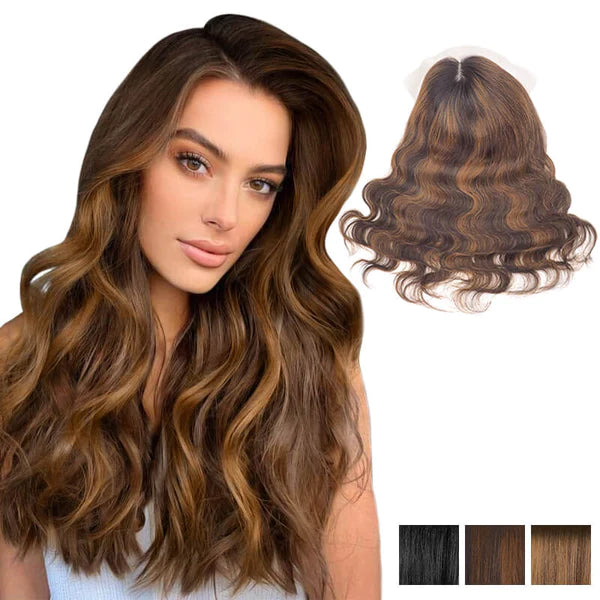
If you're experiencing reduced fullness while transitioning to gray, a topper can provide additional coverage without requiring you to change your entire hairstyle.
When selecting salt and pepper hair toppers, consider how the topper will work with your existing mixture of dark and gray strands.
Look at the overall color rather than focusing on just one individual strand.
A suitable piece should complement the surrounding hair and help create a consistent appearance.
Match the Overall Tone, Not Just the Roots
Your hair may have several shades during the transition to grey. For example, you might have:
-
Darker roots
-
Medium grey through the middle
-
White or lighter strands
-
Previously colored ends
When choosing salt and pepper hair toppers, don't try to match just one section of your hair. Instead, look at the overall colour, preferably in natural light. Pay attention to the shades that appear most throughout your hair and choose a topper that works well with the mix.
Use Texture to Your Advantage
Texture can also help make a mixed-color hairstyle look intentional.
Waves, soft movement, and layered styling can help different shades blend visually.
You don't necessarily need a perfectly straight hairstyle to create a polished result.
The best approach is to choose a texture that works naturally with your existing hair.
Keep the Hairstyle Simple
During a colour transition, complicated styling can sometimes make differences in colour more noticeable.
A simple hairstyle can allow your natural shades to become part of the overall look.
Consider:
-
Soft waves
-
Natural movement
-
Simple layers
-
A familiar part
-
Light volume around the crown
The objective isn't to disguise the transition. It's to make the different shades look like they belong together.
Add Volume Where You Need It
Some people notice changes in perceived fullness while transitioning to gray.
If you want additional coverage or volume without wearing a full wig, a topper can be a useful option.
A topper can focus on a specific area rather than covering the entire head.
This can be especially helpful if you want to maintain your existing hairstyle while making the crown appear fuller.
Don't Overload Your Hair With Products
It's tempting to use multiple products when you're trying to control new growth, frizz, or different textures.
However, too much product can make hair look heavy or less natural.
Use only what you need to create the desired style. If you're wearing a topper, remember that the topper also needs appropriate care and maintenance.
A simple styling routine is often easier to maintain throughout the gray transition.
How to Make the Gray Transition Look More Polished
Small styling choices can make a noticeable difference.
Work With Your Natural Part
A familiar part can help your hairstyle feel consistent as your color changes.
Keep the Length Manageable
A practical length can make different shades easier to blend.
Use Gentle Volume
Adding controlled volume can help create a balanced appearance without making the hair look overly styled.
Choose Complementary Accessories
Simple accessories can make a changing hair color feel like an intentional style choice rather than something you're trying to hide.
Can a Topper Help During the Gray Transition?
Yes, a topper can be used as part of a transitional hairstyle when you want additional coverage or fullness.
The important consideration is color coordination.
A topper that is dramatically different from your natural hair may be more noticeable. A topper that complements the mixture of tones can integrate more naturally.
If you're comparing different materials, the choice between synthetic and human hair can also affect styling flexibility and the overall appearance. See compare salt and pepper topper options for a closer look at the differences.
How Gray Toppers Can Create Fullness
A topper doesn't have to make your entire head of hair look dramatically different.
A well-positioned piece can add volume in a specific area while allowing your natural hair to remain visible around it.
This approach can be useful if your goal is simply to make the hair around the crown appear fuller.
For more information about using toppers for this purpose, see gray hair topper coverage.
What to Avoid During the Transition
A few common approaches can make the process more frustrating.
Constantly Coloring the Hair
Repeatedly trying to eliminate every gray strand can make the transition feel never-ending.
Choosing a Completely Different Hair Color
A dramatic color difference can make blending more difficult.
Over-Styling
Too much product or heat can make the hair look less natural.
Ignoring the Changing Color Pattern
Your hair may change gradually, so the color that worked several months ago may not be the best match later.
Review your overall hair color periodically as the gray develops.
A Simple Routine for Intentional Salt-and-Pepper Hair
You can keep your routine straightforward:
1. Observe your natural color.
Look at your hair in natural lighting and identify the dominant shades.
2. Choose complementary pieces.
If you use a topper, select a color that works with the overall pattern.
3. Keep your styling consistent.
Use a familiar part and a manageable hairstyle.
4. Add volume where needed.
Use styling or a topper to enhance specific areas rather than completely changing your look.
5. Maintain everything properly.
Care for your natural hair and topper so both continue to look healthy and manageable.
Let Your Gray Become Part of Your Style
The transition to gray doesn't have to look like an unfinished stage.
Salt-and-pepper hair naturally contains contrast, and that contrast can become part of your overall style. Instead of trying to make every strand match perfectly, focus on creating harmony between your natural color, hairstyle, and any hair-enhancing pieces you use.
If you're using a topper, remember that the goal is not simply to add more hair. It should complement the hair you already have.
Final Thoughts
Making salt-and-pepper hair look intentional is largely about embracing the changing color rather than fighting it.
Choose styles that work with your natural contrast, avoid excessive product and heat, and consider a topper if you want additional coverage or fullness.
For anyone using a topper during the transition, color coordination is especially important. The right piece can complement your mixture of darker and gray strands while allowing your natural hair to remain part of the finished look.
With a little patience and thoughtful styling, the transition to gray can become a distinctive part of your personal hairstyle rather than something you need to constantly conceal.