

A hair topper can be a simple way to add coverage and volume where you need it. But if you wear one regularly, you may wonder how well it fits into activities you do every day. Can you sleep with it on? Is it okay to wear during a workout? What happens if you go swimming?
The answer depends on the activity, your topper, and how it is attached. Sweat, water, friction, and movement can all affect how comfortable your topper feels and how well it holds up over time. Knowing when to keep it on and when to take it off can help you avoid unnecessary wear and take better care of both your topper and natural hair.
Can You Sleep While Wearing a Hair Topper?
In most cases, removing your hair topper before sleeping is a better option.
During sleep, your hair can rub against the pillow for several hours. This repeated friction may cause tangling, matting, or unnecessary wear, particularly when the topper is made with human hair.
Sleeping can also put additional pressure on the attachment points. If the topper moves while you sleep, it may pull against your natural hair.
If you wear a topper during the day, consider making removal part of your evening routine.
Before going to bed:
-
Gently remove the topper.
-
Carefully detangle the hair.
-
Make sure it is dry before storage.
-
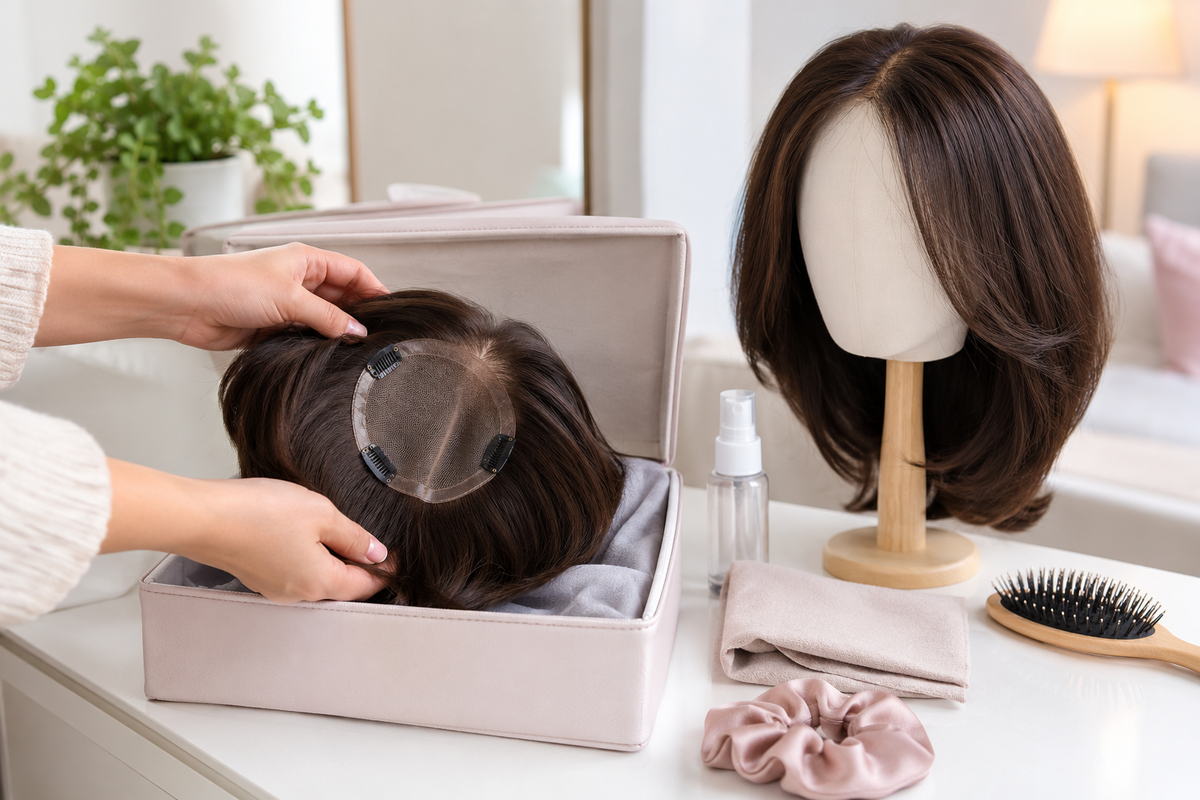
Store it in a clean, dry place.
-
Avoid placing heavy objects on top of it.
If you need to wear your topper overnight for a specific reason, follow the care and wearing instructions provided for your particular topper.
Can You Exercise While Wearing a Hair Topper?
You may be able to exercise while wearing a hair topper, but your activity level matters.
Light activities may be easier to manage than intense workouts. Exercise can create sweat, heat, and movement, which may affect both comfort and the topper's styling.
Before exercising, consider:
Your Attachment Method
The topper should feel secure without creating excessive tension. If you constantly need to adjust it during exercise, the attachment method or positioning may need to be reconsidered.
How Much You Sweat
Sweat and moisture can affect the hair and may increase the need for cleaning and maintenance.
The Type of Exercise
Walking, stretching, and lower-impact activities may be easier to manage than activities involving significant movement, friction, or repeated contact with equipment.
For people who wear toppers regularly, understanding everyday hair topper wear can help create a routine that balances convenience, comfort, and proper care.
What Should You Do After Exercising?
If you exercise while wearing your topper, don't ignore sweat and moisture afterward.
Once you're finished:
-
Allow the topper and your natural hair to dry appropriately.
-
Gently detangle the hair if necessary.
-
Avoid aggressive brushing while the hair is wet.
-
Clean the topper when it actually needs cleaning rather than automatically washing it after every light activity.
-
Store it properly if you are removing it.
Frequent exercise may mean your topper needs more regular maintenance than it would with occasional wear.
For broader maintenance advice, caring for a hair topper is an important part of keeping it looking good over time.
Can You Swim While Wearing a Hair Topper?
Swimming is a little different from your usual daily activities.
Once your topper gets wet, it has to deal with more than just water. Pool water contains chlorine, while saltwater can leave the hair feeling dry and tangled. The water and movement can also make the topper harder to manage afterward.
There’s also the question of how securely your topper is attached. It may feel perfectly secure while you're going about your day, but swimming involves a lot more movement. Your topper may shift, especially during repeated strokes or when you're getting in and out of the water.
For most people, taking the topper off before swimming is the simpler option. It keeps the topper away from unnecessary water, chemicals, and movement and can make post-swim care much easier.
If you do need to swim while wearing it, check the care instructions for your specific topper and attachment method first. Some toppers may handle moisture differently, so it's best to follow the manufacturer's recommendations.
What About Showering With a Hair Topper?
If you're taking a shower, it's usually best to remove your topper first.
Even a quick shower can leave the hair wet and make it harder to manage. Depending on the topper and how it is attached, repeated exposure to water may also lead to more tangling or put extra stress on the attachment.
If your topper isn't specifically made or recommended for wet wear, take it off before showering and follow the care instructions for washing and drying it.
Keep in mind that human hair toppers still need gentle care. Although the hair is real, it is no longer growing from your scalp, so it doesn't receive the same natural oils and moisture as your own hair.
If your topper does get wet in the shower, avoid rubbing or brushing it roughl
Can You Wear a Hair Topper in the Rain?
A little rain does not necessarily mean your topper is ruined, but prolonged exposure to water is something to avoid when possible.
If your topper becomes wet:
-
Don't aggressively rub it with a towel.
-
Gently remove excess moisture.
-
Allow it to dry naturally as recommended.
-
Detangle carefully.
-
Avoid excessive heat while drying.
-
Check the attachment before wearing it again.
If you regularly live in a rainy or humid environment, building a practical maintenance routine becomes even more important.
Here’s a more natural version that feels less like a care manual:
What If Your Hair Topper Gets Wet?
If your topper gets wet from rain, sweat, or an accidental splash, there's usually no need to worry. Just be gentle with it while it dries.
-
Gently blot away excess moisture instead of rubbing the hair.
-
Let the topper dry as recommended.
-
Avoid brushing or pulling at the hair while it's wet.
-
Once it's dry, gently detangle it if needed.
-
Check that the attachment still feels secure before wearing it again.
If your topper gets wet regularly, follow the manufacturer's care instructions to make sure you're using the right drying and maintenance routine.
How Do Different Activities Affect a Hair Topper?
Different activities create different challenges:
|
Activity |
Main Concern |
General Approach |
|
Sleeping |
Friction and tangling |
Prefer removing the topper |
|
Light exercise |
Sweat and movement |
Can be manageable with suitable attachment |
|
Intense exercise |
Sweat, movement, and friction |
Use extra caution |
|
Swimming |
Water, chemicals, and movement |
Prefer removing the topper |
|
Showering |
Prolonged moisture |
Remove unless specifically designed for wet use |
|
Rain |
Moisture and frizz |
Protect when possible |
The right approach depends on the specific topper and the way you wear it.
How Can Daily Wearers Protect Their Topper?
If you wear a topper most days, a few simple habits can help keep it looking and feeling good.
-
Remove it gently to avoid pulling the base or your natural hair.
-
Detangle it carefully and avoid unnecessary brushing.
-
Don't wash it more often than needed.
-
Limit unnecessary heat and harsh styling.
-
Let it dry properly after getting wet or sweaty.
-
Store it safely when you're not wearing it.
-
Follow the care instructions for your specific topper.
Caring for a hair topper doesn't have to be complicated. Consistent, gentle care can help reduce unnecessary wear and keep your topper looking its best.
When Should You Remove Your Hair Topper?
A simple rule is to consider moisture, friction, movement, and pressure.
If an activity involves significant exposure to water, heavy sweating, strong movement, or prolonged friction, ask whether keeping the topper on is actually necessary.
Removing it before sleeping and swimming is often a simple way to reduce avoidable wear. Exercise can be more situation-dependent.
Looking for the Right Hair Topper?
If you're looking for a comfortable, natural-looking solution for added coverage and volume, explore our hair toppers for women designed for everyday wear and different styling needs. You can also browse our collection of hair pieces for women to find an option that fits your hair goals and routine.
Final Thoughts
You can incorporate a hair topper into many parts of your daily routine, but sleeping, exercising, and swimming are not all the same.
Sleeping can create friction and tangling, exercise can introduce sweat and movement, and swimming exposes the topper to water and potentially chemicals. For this reason, removing your topper before sleeping and swimming is generally the more protective choice, while exercise depends on your activity, attachment method, and comfort.
Most importantly, treat your topper as something that needs regular care. A thoughtful routine can help preserve its appearance while also making everyday hair topper wear more comfortable and manageable.
FAQs
Can You Wear a Hair Topper All Day?
Yes, you can wear a topper throughout the day if it feels comfortable, secure, and does not cause pulling, pressure, or irritation.
Can Sweat Damage a Hair Topper?
Regular sweat may affect the topper's hair and attachment over time, so allow it to dry and follow the recommended care routine.
How Should You Store a Hair Topper After Wearing It?
Gently detangle the topper, make sure it is completely dry, and store it in a clean, dry place away from direct heat.