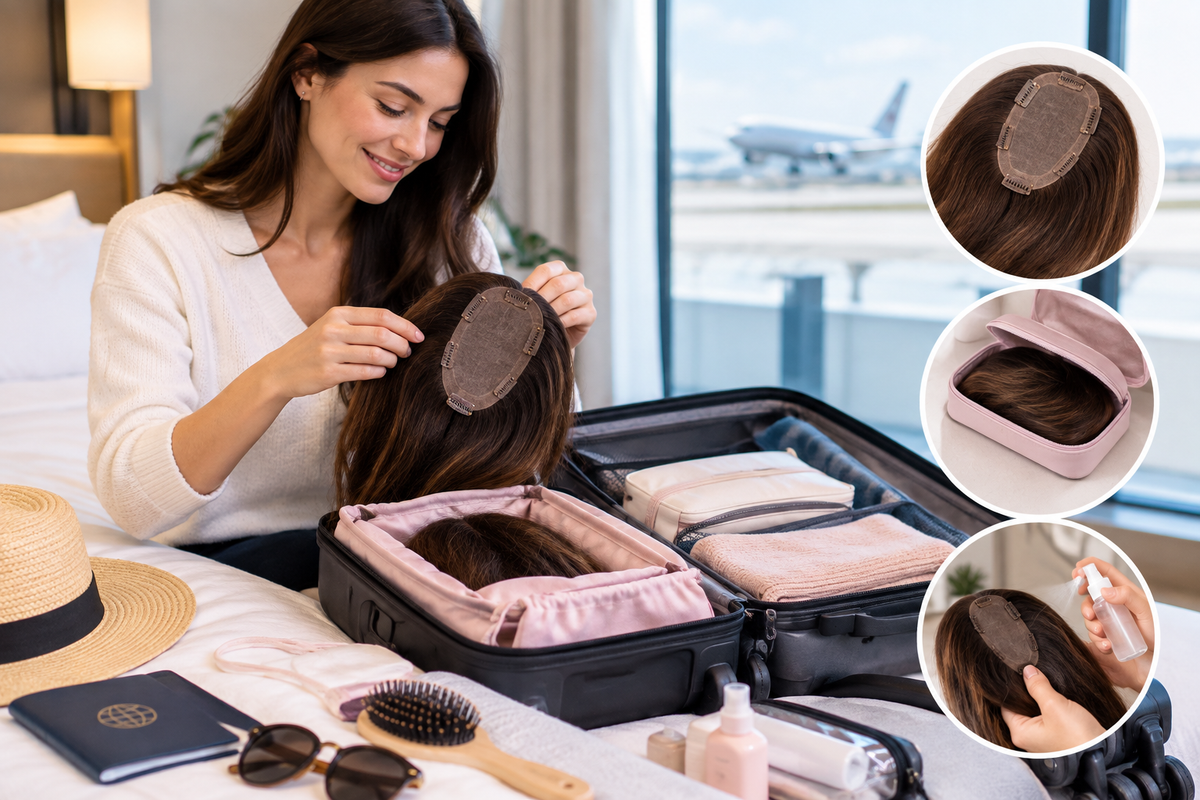
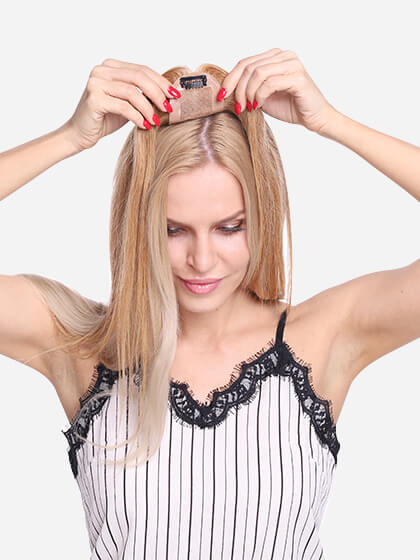
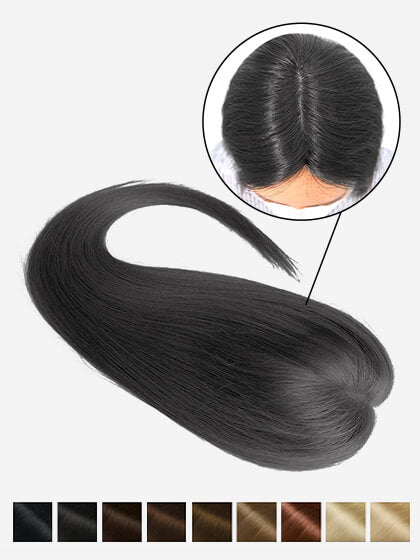
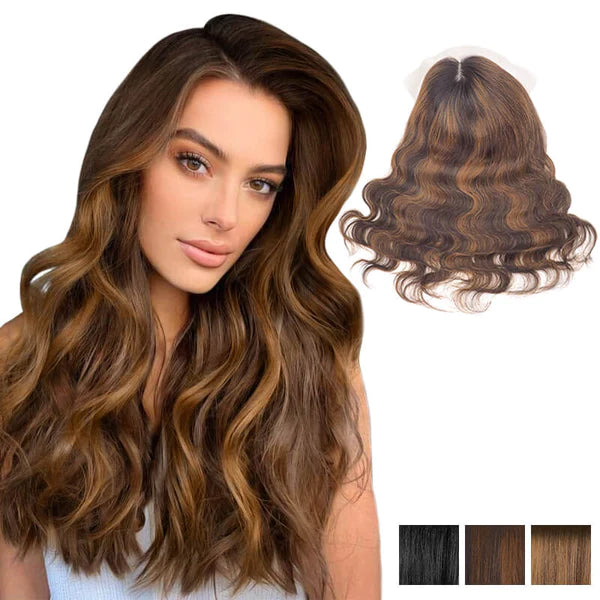
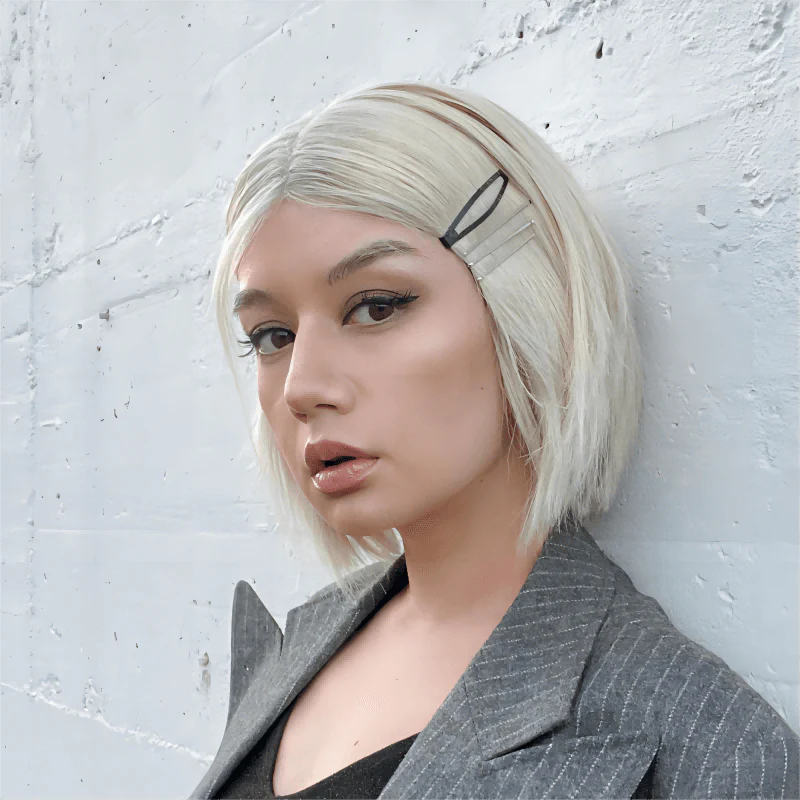
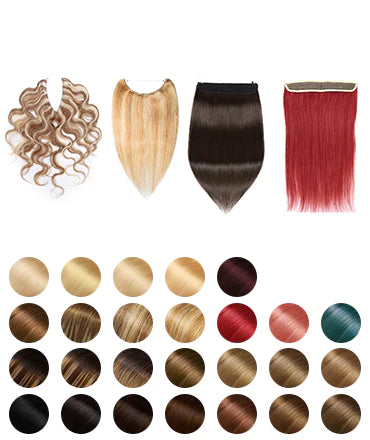
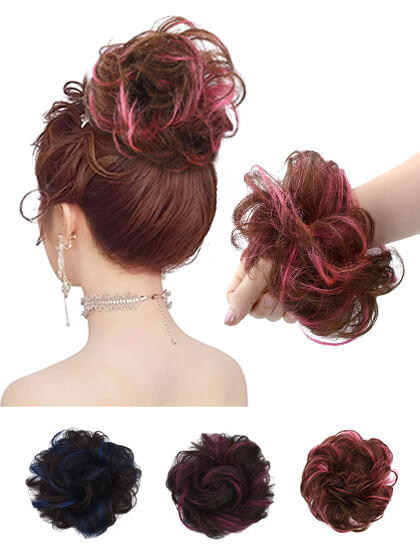

A hair topper can add coverage and volume without looking obvious, but getting a natural-looking result involves more than choosing a good-quality piece. Small details such as the base, color, density, size, placement, texture, and styling can all affect how well the topper blends with your own hair.
Whether you're wearing a topper for the first time or have been using one for a while, knowing what to look for can make styling much easier. The goal isn't simply to make the topper invisible. It's to make it work naturally with your existing hair and look like a natural part of your hairstyle.
In this guide, we'll look at the details that can affect how realistic a hair topper looks and share simple ways to create a more seamless finish.
What Makes a Hair Topper Look Real?
A natural-looking topper usually doesn't depend on one single feature. Instead, several elements work together.
The most important factors include:
-
A suitable base
-
A good color match
-
Appropriate density
-
Correct placement
-
A natural-looking hairline
-
Compatible hair texture
-
Proper blending
-
Natural styling
-
Correct topper size
When these elements complement one another, the topper can become much less noticeable.
For shoppers comparing different hair pieces for women, it's helpful to look beyond the overall appearance of the product and consider how its individual features will work with your own hair.
1. Choose the Right Base
The base is one of the first things to consider when choosing a hair topper because it affects how the piece sits, where it provides coverage, and how easily it blends with your natural hair.
Different base constructions can work better for different coverage needs and hairstyles. What works well for one person may not be the right choice for someone else.
When choosing a base, consider:
-
The area you want to cover: The base should provide enough coverage without extending much farther than necessary.
-
How it sits on your head: A base that sits securely and comfortably can make blending and styling easier.
-
Your natural part: Consider how the base will work with the way your hair naturally separates and falls.
-
The hair around the topper: Make sure you have enough surrounding hair to blend the edges into the rest of your hairstyle.
Don't assume that the smallest or lightest base will automatically look the most natural. The right base is one that suits your coverage needs and works naturally with your existing hair.
2. Get the Color as Close as Possible
Even a beautifully made topper can look less natural if its color doesn't coordinate with your existing hair.
When selecting a color, consider your hair in natural lighting rather than relying only on indoor lighting or a screen.
Look at:
-
Your roots
-
Mid-lengths
-
Ends
-
Natural highlights
-
Undertones
-
Any color variation throughout your hair
Your hair may not be one completely uniform shade. A topper that works with the overall appearance of your hair can sometimes look more natural than one that matches only a single section perfectly.
3. Choose the Right Density
Density refers to how much hair is present on the topper.
Too much density can sometimes make the topper appear noticeably fuller than the surrounding hair. Too little density may not provide the coverage or volume you want.
The goal is balance.
Think about the density of your natural hair around the area where the topper will be placed. The topper should complement the surrounding hair rather than create an obvious difference in volume.
4. Pay Attention to the Size
A topper needs to cover the area that requires additional volume or coverage.
If the base is too small, you may have difficulty achieving adequate coverage. If it is much larger than necessary, it may be harder to blend naturally with your surrounding hair.
Before choosing a size, measure the area you want to cover and consider how much surrounding hair you have available for blending.
The correct size can make attachment, styling, and blending much easier.
5. Placement Makes a Big Difference
Even the right topper can look unnatural if it is positioned incorrectly.
Take time to identify where the topper should sit before securing it. It should complement your natural part and the area where you want additional coverage.
Avoid repeatedly moving it after attachment. Constant repositioning can disturb the surrounding hair and make the final style less consistent.
Once you find a placement that works well, try to use the same general positioning as part of your regular routine.
6. Blend the Topper With Your Natural Hair
Blending is one of the most important steps in creating a natural-looking result.
The goal is to make the transition between the topper and your own hair look gradual rather than obvious.
You can work with:
-
Your natural part
-
The hair around the sides
-
The front section
-
The lengths and ends
-
Your natural texture
Rather than concentrating only on the topper itself, look at the entire hairstyle. A balanced overall appearance can make the addition much less noticeable.
7. Match the Hair Texture
Color isn't the only thing that needs to coordinate with your natural hair.
Texture also matters.
If your natural hair is wavy while the topper is extremely straight, the difference may be noticeable. Similarly, a highly textured topper may look different from very straight surrounding hair.
Whenever possible, choose a texture that works with your natural hair or style the topper and your surrounding hair together.
This creates greater consistency throughout the finished hairstyle.
8. Avoid Over-Styling
It can be tempting to use lots of products or complicated styling techniques to make a topper look perfect.
In many cases, simpler is better.
Excessive product can create buildup and make the hair look less natural. Over-styling can also make the topper stand out from the rest of your hairstyle.
Instead, focus on creating a style that looks similar to how you would normally wear your hair.
Natural movement is often more convincing than a perfectly rigid style.
9. Make the Front Look Natural
The front area can have a major impact on how realistic a topper appears.
Pay attention to how the topper transitions into your natural hair at the front. Avoid creating an abrupt change in volume or texture.
Your styling should help soften the transition.
Small details such as the direction of the hair, the amount of volume, and how the surrounding strands are arranged can all affect the finished appearance.
10. Consider Your Natural Hairline and Part
Your natural part can help determine how you position and style the topper.
Instead of forcing the topper into a completely different direction, consider working with the way your hair naturally falls.
A familiar part and natural direction can make styling easier and help the topper integrate with your existing hairstyle.
If you change your part frequently, spend some time experimenting with different placements before settling on your everyday look.
11. Don't Ignore the Ends
The ends of the topper should work with the rest of your hairstyle.
If the topper has significantly different length, texture, or fullness from your natural hair, the transition may be easier to notice.
Blending the lengths and styling the overall hair together can help create a more cohesive appearance.
Sometimes a simple change in styling can make a bigger difference than adding more product.
12. Keep the Topper Well Maintained
A natural-looking topper also needs proper maintenance.
Over time, tangles, dryness, product buildup, and excessive heat styling can change how the hair looks.
Regular care can help preserve:
-
Smoothness
-
Manageability
-
Hair texture
-
Shine
-
Overall appearance
Proper maintenance should be part of your normal topper routine rather than something you do only when the hair starts looking worn.
For additional weather-related maintenance, see maintain a natural-looking topper and consider how humidity, rain, heat, and other conditions may affect the hair.
What Can Make a Hair Topper Look Less Natural?
Understanding common problems can be just as useful as knowing what to do.
A topper may appear less natural when:
-
The color is noticeably different from the surrounding hair.
-
The density is much higher than the natural hair.
-
The topper is positioned incorrectly.
-
The texture doesn't match.
-
The base is not appropriate for the coverage area.
-
The hair is heavily tangled.
-
Too much styling product has been used.
-
The topper isn't properly blended.
-
The hairstyle doesn't match the wearer's usual look.
The solution isn't always to replace the topper. Sometimes adjusting the placement, styling, or blending technique can make a significant difference.
A Simple Checklist for a Natural-Looking Topper
Before leaving home, take a quick look at your complete hairstyle rather than focusing only on the topper.
Ask yourself:
Color: Does it coordinate with my natural hair?
Density: Does the volume look balanced?
Placement: Is the topper sitting where it should?
Texture: Does the hair move naturally with the surrounding hair?
Blend: Can I see an obvious transition?
Styling: Does the finished hairstyle look like something I would normally wear?
Condition: Is the hair smooth, clean, and manageable?
If these elements work together, you're much more likely to achieve a convincing result.
Final Thoughts
What makes a hair topper look real isn't just the quality of the hair. Color, density, base, size, placement, texture, blending, and styling all play a role.
The best approach is to think about the topper as part of your complete hairstyle rather than as a separate piece of hair. Choose features that complement your natural hair, take time to position and blend the topper, and maintain it properly between wears.
With the right combination of these details, a topper can become a natural-looking part of your everyday hairstyle rather than something that feels separate from it.
FAQs
1. How can I make my hair topper blend better?
Choose a matching color and texture, position it correctly, and gently blend surrounding hair for a seamless, natural appearance.
2. Can a hair topper look natural with thin hair?
Yes, choosing the right density, base size, and placement can help a topper blend naturally with thinner surrounding hair.
3. How often should I maintain my hair topper?
Regular gentle cleaning, detangling, and proper storage can help maintain its texture, appearance, and overall natural-looking finish between wears.